
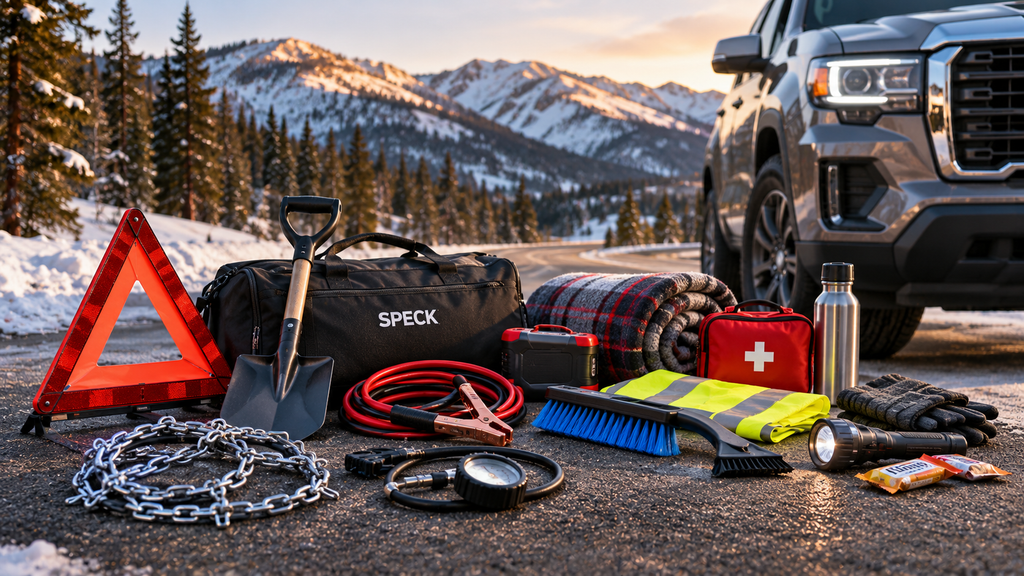
Quick answer: A roadside emergency kit for Washington drivers needs traction tools and recovery supplies. First, pack tire chains, an ice scraper, a fold-out shovel, and kitty litter for traction. Next, add jumper cables, a tire pressure gauge, and a portable battery charger for recovery. Together, these items keep you safe on mountain passes, rural roads, and in unpredictable Pacific Northwest weather.
Driving across the Pacific Northwest offers scenic mountain ranges, coastal highways, and vast agricultural valleys. However, our region’s geography also brings sudden weather changes and steep elevation gains. In addition, long stretches of rural highway can leave you miles from cell service and roadside assistance.
You might commute across Snoqualmie Pass, drive the Columbia River Gorge, or travel through the Tri-Cities and Yakima. In every case, being ready for a breakdown or travel delay is essential. For that reason, build a roadside emergency kit tailored to local driving conditions. It gives you peace of mind and keeps your passengers safe.
Jump to: kit checklist, core categories, common mistakes, expert tips, or frequently asked questions.
Last updated: November 24, 2026. Chain and traction details follow WSDOT guidance published in October 2026. Always check posted requirements before you travel.
Why Every Washington Driver Needs a Roadside Emergency Kit
Washington road conditions can shift within a single hour of driving. For example, a routine trip over Stevens Pass or Blewett Pass can turn into a multi-hour closure. Typically, heavy snowfall, ice, or avalanche control work causes these closures. Meanwhile, in rural Eastern Washington, winter temperature drops and windstorms can leave stranded motorists exposed far from town.
WSDOT advises anyone driving over the mountains in winter to carry chains and practice installing them at home. Conditions change fast, so chains may suddenly be required. Check WSDOT’s winter travel guidance for current traction and chain rules. As a result, a well-stocked kit keeps minor problems from becoming dangerous emergencies.
Roadside Emergency Kit Checklist for Washington Drivers
| Category | Recommended Items | Primary Purpose |
| Winter & Traction | Tire chains, ice scraper/snow brush, folding shovel, bag of kitty litter/sand | Escaping snowbanks and navigating mandatory pass traction requirements |
| Vehicle Recovery | Quality jumper cables (or portable jump-pack), tire pressure gauge, multi-tool, duct tape | Handling minor mechanical issues and dead batteries without waiting for a tow |
| Visibility & Safety | LED flashlight, extra batteries, reflective triangles/flares, bright safety vest | Alerting oncoming traffic and maintaining visibility during night repairs |
| Comfort & Survival | Wool blankets, heavy gloves, hand warmers, bottled water, high-calorie snacks | Maintaining body warmth and nutrition during extended roadside delays |
Core Categories for Your Roadside Emergency Kit
1. Traction and Winter Weather Gear
High-elevation roads and sudden snow flurries demand specialized traction equipment. Washington law does not require every driver to carry chains year-round. However, you must install chains when a requirement is posted. Failing to do so can bring a $500 fine. Because conditions change quickly, WSDOT recommends carrying chains on mountain passes.
- Properly Sized Tire Chains: Test fit your chains in your driveway before hitting the road so you can install them quickly in freezing conditions.
- Ice Scraper and Snow Brush: A heavy-duty telescoping scraper clears frost and heavy snow accumulation off windows, mirrors, and roof lines.
- Collapsible Shovel & Traction Abrasives: A compact metal shovel clears snow from around your tires. In addition, non-clumping kitty litter or sand provides immediate grip on ice.
2. Basic Vehicle Recovery Tools
Cold weather can drain weak batteries and lower tire pressure. As a result, basic tools help you fix simple problems on your own:
- Jumper Cables or Portable Jump-Pack: Cold mountain air quickly drains weak car batteries. A self-contained lithium jump starter allows you to restart your engine without waiting for another motorist.
- Tire Repair Essentials: Keep a digital tire pressure gauge and a portable 12-volt air compressor. Also pack a tire plug kit to handle minor punctures on rural backroads.
- Basic Tool Set: A multi-tool, adjustable wrench, screwdrivers, pliers, and heavy-duty duct tape handle temporary fixes under the hood.
3. Visibility and Communication
Staying visible to oncoming traffic and maintaining contact with emergency services are critical during dark or foggy driving conditions:
- High-Output Lighting: Pack a hands-free headlamp and a heavy-duty LED flashlight along with spare batteries. Headlamps keep both hands free for installing chains or checking oil levels.
- Emergency Signaling: Keep reflective safety triangles, roadside flares, or LED beacons. They warn approaching drivers if your car is stalled on a narrow shoulder.
- Power Banks: Cold weather drains smartphone batteries rapidly. Keep a fully charged high-capacity power bank and long charging cables in your glovebox.
4. Warmth, Food, and First Aid
If your engine stalls or you run out of fuel, your car’s heater will stop working. This can happen during an extended pass closure. Therefore, staying warm and fed becomes your immediate priority:
- Thermal Layers & Blankets: Pack heavy wool blankets, emergency Mylar space blankets, waterproof rain ponchos, insulated gloves, knit hats, and chemical hand warmers.
- Non-Perishable Food & Water: Store several gallons of drinking water and non-perishable, high-energy snacks like protein bars, dried fruit, nuts, and jerky.
- First-Aid Kit: Keep a stocked medical kit containing sterile bandages, antiseptic wipes, burn ointment, pain relievers, prescription medications, and trauma scissors.
Common Mistakes to Avoid
A frequent mistake is packing emergency supplies deep under heavy luggage in the trunk. As a result, you must unload the whole vehicle on the shoulder to reach a flashlight or flat-tire tools. That creates safety hazards. Instead, store your kit in an accessible container or bag near the tailgate.
Another common oversight is skipping seasonal gear checks. Flashlight batteries leak over time. Water bottles can freeze and burst in sub-zero temperatures. Food can also spoil. Therefore, check and refresh your roadside emergency kit twice a year, ideally every spring and autumn.
Expert Tips for Washington Drivers
- Keep Your Gas Tank Half Full: In winter or on long rural drives, keep your tank at least half full. This helps prevent fuel line freezing. It also lets you run the engine for heat if you are stranded.
- Download Offline Maps: Cell service can be unreliable in mountain passes and deep valleys. Therefore, download regional GPS maps to your smartphone before leaving home.
- Check Pass Reports Before Departing: Review live WSDOT traffic cameras, mountain pass weather conditions, and chain requirements prior to leaving.
- Schedule Pre-Trip Maintenance: Keep your vehicle dependable year-round by visiting our certified technicians at our Speck dealership locations across Washington.
- Explore Flexible Financing: Budget for necessary pre-trip maintenance or seasonal tires by reviewing flexible payment options at our Speck auto finance center.
Frequently Asked Questions
Are tire chains legally required in Washington?
Not year-round. Chains are required only when a requirement is posted on your route. WSDOT still advises carrying chains over mountain passes in winter, since conditions change quickly. Drivers who skip required chains risk a $500 fine. Rules for AWD and 4WD vehicles depend on the posted level, so check the WSDOT pass report before you go.
Where should I store my roadside emergency kit in my vehicle?
Store your kit in a heavy-duty tote or duffel bag in the rear cargo area or trunk. That way, it stays easy to reach without moving heavy cargo.
How often should I replace items in my car’s emergency kit?
Inspect your kit every six months. Then replace expired food and medications, check battery charge levels, and verify that water containers are intact.
How can I schedule a vehicle safety inspection near me?
You can schedule a multi-point safety check or routine service at any Speck location. Then find the nearest service department on our Speck dealership locations page.
Related Reading: Want to make sure your vehicle is mechanically prepared for your next long drive? Read our guide on 10 Brake Repair and Maintenance Tips for WA Drivers. It helps your brakes perform safely on mountain grades.
Community Spotlight: Want to see how Speck Family Dealerships stays connected to our roots and regional history? Read about the History of Speck Motors: 114 Years in Sunnyside. It shows our local community partnerships and long-standing dedication to Washington drivers.
Final Thoughts
Building a well-stocked roadside emergency kit is a practical investment. Overall, it protects you and your passengers from unpredictable Pacific Northwest weather, pass closures, and sudden mechanical issues. With traction gear, basic recovery tools, emergency lighting, and warm supplies, you can explore Washington’s scenic highways with confidence.
To read more vehicle care guides and driving advice, explore our latest articles from the Speck blog. You can also browse our used vehicle inventory at Speck Dealerships or learn about our community on the Speck community involvement page.
Ready to find your next vehicle? Visit Speck Dealerships in Yakima or the Tri-Cities today — or browse our inventory online.
